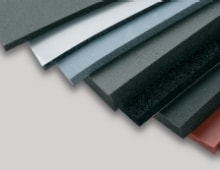
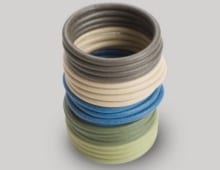
Our EMI shielding solutions offer various conductive fillers that are designed to ensure galvanic compatibility while providing low contact resistance between mating surfaces. Our conductive elastomers are fully cured silicones or fluorosilicone loaded with a variety of highly conductive particles providing superior EMI/RFI shielding performance combined with excellent environmental sealing.
Why is EMI shielding important?
All active electronic devices have the potential to emit electromagnetic radiation. EMI shielding products protect critical electronic components and systems from EMI interference.
- EMC compliance required by law/performance specifications
- EMC non-compliance causes system level redesign late in product development process
Where is EMI shielding used?
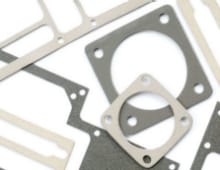
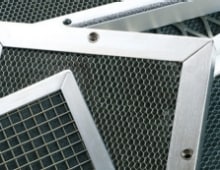
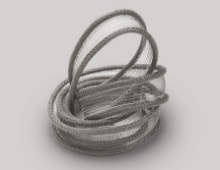
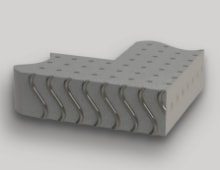
EMI shielding gaskets are applied at the seams of an enclosure to establish a low resistance conductive path to block radiated emissions into and out of the enclosure.
- Conductive gaskets/windows/vents at enclosure assembly level
- Conductive gaskets for module assembly
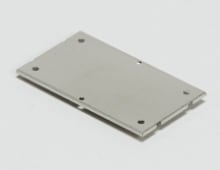
- Conductive gasket at board level cans at PCB level
EMI Shielding Materials Application Guide
Learn how to minimize interference, enhance device performance, and ensure long-term reliability with the right EMI shielding materials. Your roadmap to efficient and compliant electronic design.
What is Electromagnetic Compatibility?
The definition of Electromagnetic Compatibility (EMC) is the measure of equipment’s capability to neither conduct electromagnetic energy nor radiate it. The equipment in turn should not be susceptible to any conducted or radiated emissions from any other source. The two most important characteristics of electromagnetic waves connected with interference are the amplitude and the
frequency of the waves.
Shielding Effectiveness
Several reasons exist to create effective shielding of equipment. Among the more important benefits are:
- To minimise radiation and thereby prevent interference with other sensitive areas or equipments.
- To reduce any radiation to a level this will make it safe for life for example, microwave ovens.
- To prevent unwanted reflections inside equipment which could cause it to malfunction.
- To ensure electrical and mechanical compatibility with the metal enclosure.
- To meet local and international EMC legislation
Materials
- Silicone Nickel Graphite (SNG)
- Fluorosilicone Nickel Graphite (FNG)
- Silicone Silver Aluminium 65 Shore A (SSA)
- Fluorosilicone Silver Plated Aluminium 70 Shore A (FSA-70)
- Silicone Nickel Aluminium (SNA)
- Fluorosilicone Nickel Aluminium (FNA)
- Silicone Nickel Graphite Flame Retardant UL94 VO (SNG-FR)
- Silicone Silver Aluminium 65 Shore A Blue (SSA-65B)
- Silicone Silver Copper (SSC)
- Fluorosilicone Silver Copper (FSC)